Imagine this: someone collapses at a park barbecue. Seconds tick by. Without quick action, their survival odds plummet below 10 percent, based on out-of-hospital cardiac arrest stats. But if you start CPR right away, you can double or even triple those chances, according to the 2025 American Heart Association guidelines.
CPR stands for cardiopulmonary resuscitation. It’s a simple emergency move. You use chest compressions and rescue breaths to keep blood and oxygen flowing when a heart stops. This buys precious time until paramedics arrive. Sudden cardiac arrest strikes fast, often without warning. It hits about 350,000 adults outside hospitals each year in the US.
You don’t need to be a doctor to help. Anyone can learn the basics. This post breaks it down. You’ll spot clear signs to act fast. Then master hands-only CPR for adults. Next, gentler steps for kids and babies. Plus, how to team up with an AED for top results. Finally, we clear up common myths from the fresh 2025 rules.
Why bother? Because cardiac arrest can happen to your neighbor, coworker, or family member. A few minutes of your effort matters. Let’s build your confidence step by step.
Spot the Emergency: Clear Signs to Start CPR Immediately
First, check the scene. Make sure it’s safe for you to approach. No traffic or hazards nearby? Good.
Shout and tap the person. “Are you okay?” No response? That’s your first red flag.
Look for normal breathing. No breaths or just gasping? Gasping counts as a bad sign. It’s called agonal breathing.
Quickly check for a pulse. Feel the neck’s carotid artery for 10 seconds max. No pulse? Start CPR now. Don’t waste time on long checks. The 2025 AHA guidelines stress this to avoid delays.
Common triggers include sudden cardiac arrest, choking, or drug overdoses. Heart issues cause most adult cases. Kids often face breathing problems or trauma.
If alone with an adult, call 911 first. Then start CPR. For a child or infant, begin CPR for 2 minutes. Then call 911. Or yell for help if others are around.
Here’s what signals an emergency:
- Unresponsive to shouts or taps.
- No normal breathing, only gasps.
- No pulse felt in 10 seconds.
Don’t delay for perfect conditions. Act fast. High-quality CPR from bystanders boosts survival big time. For full details, check the 2025 AHA CPR guidelines.
Hands-Only CPR for Adults: Simple Steps Anyone Can Do
Adults need fast action. Hands-only CPR works great if you’re not trained in breaths. The AHA pushes this for bystanders.
Step 1: Call 911. Put the phone on speaker if possible.
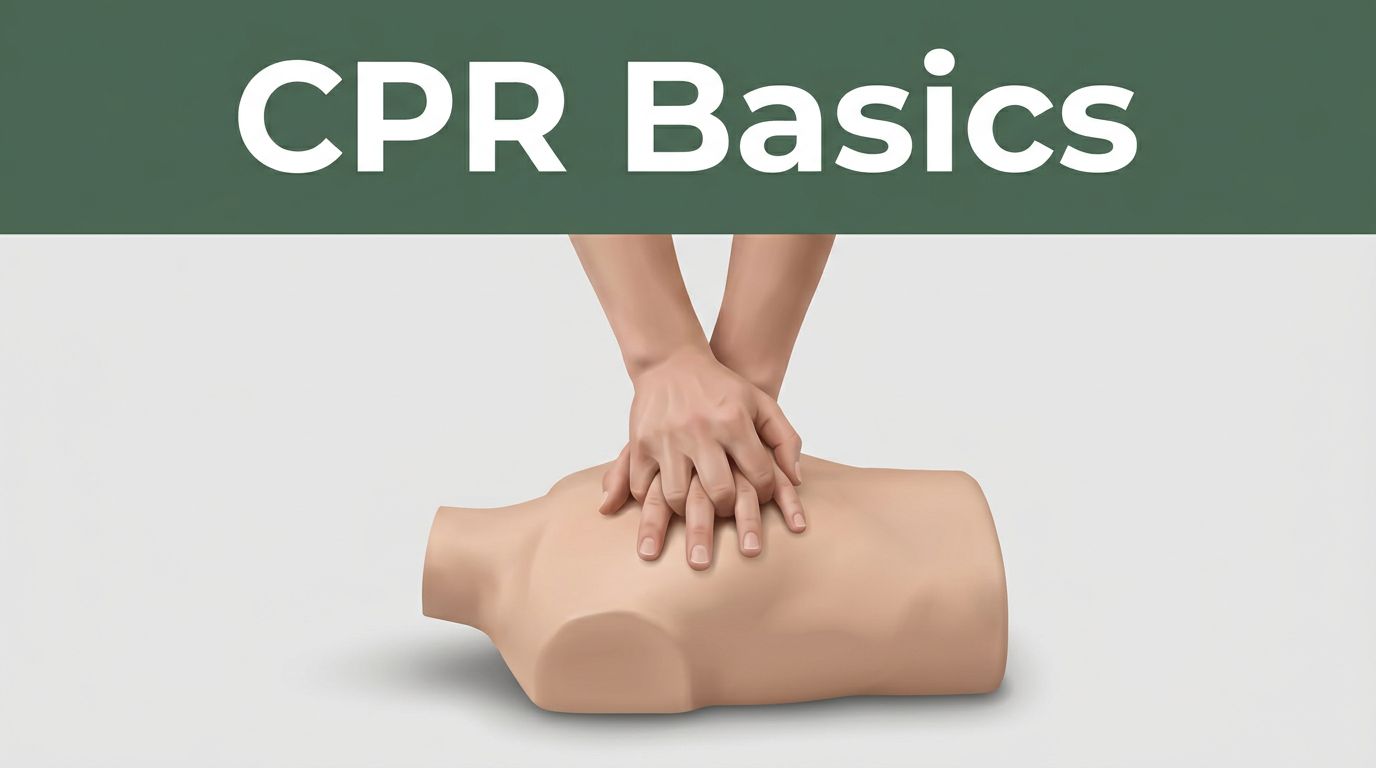
Step 2: Push hard and fast. Place hands in the center of the chest, on the lower half of the breastbone. Press at least 2 inches deep. Aim for 100 to 120 compressions per minute. That’s the beat of “Stayin’ Alive” by the Bee Gees.
Keep going until help arrives or the person stirs. Let the chest fully recoil between pushes. Minimize pauses.
If you’re trained, add breaths. Do 30 compressions. Then give 2 breaths. Tilt the head back, lift the chin, pinch the nose. Watch for chest rise. Each breath lasts 1 second.
One rescuer sequence: Ensure safety. Tap and shout. Call 911. Get an AED if nearby. Start compressions.
Quality beats perfection. Push deep enough. Go quick. Tired? Switch with someone else.
This method fits the 2025 updates. It simplifies for everyone. See official hands-only CPR steps to practice.
Push through fatigue. Your rhythm keeps blood moving to the brain and heart.
CPR for Children and Infants: Gentler but Just as Vital
Kids and babies differ from adults. Their bodies are smaller. Use less force to avoid harm. The 2025 AHA and AAP guidelines cover this clearly.
For a child (age 1 to puberty): Use one or two hands. Compress the chest about 2 inches deep. Same rate, 100 to 120 per minute. Solo rescuer? 30 compressions to 2 breaths. Two rescuers? 15 to 2.
Position hands same as adults. Let the chest recoil fully.
For an infant (under 1 year): Use two fingers. Press just below the nipple line, 1.5 inches deep. Same rate and ratios. Cover mouth and nose for breaths. Give gentle puffs. See the chest rise slightly.
If alone, do CPR for 2 minutes. Then call 911.
Breaths matter more for young ones. They often arrest from breathing issues, not heart stops.
Differences from adults:
- Depth: Shallower to match size.
- Technique: Fingers for babies; one/two hands for kids.
- Breaths: Smaller volumes.
Follow the one chain of survival for all ages now. For pediatric updates, read this AHA news release.
Practice makes it natural. You protect little ones best by starting early.
AED Power-Up: How to Use One with CPR for Best Results
An AED, or automated external defibrillator, saves lives. It analyzes heart rhythm and shocks if needed. Pair it with CPR. Survival odds double.
Grab the AED as soon as you can. Many public spots have them.
Steps: Turn it on. It talks you through.
Expose the chest. Dry it if wet. Place one pad below the right collarbone. The other on the left side, below the armpit. For kids and infants, use child pads if available. Or adult pads in front-back position.
Follow prompts: “Analyzing rhythm. Stand clear.” It shocks if needed. No shock? Resume CPR right away for 2 minutes. Repeat.
Safe for all ages. Wet chests? Wipe dry first. No harm if not needed.
The 2025 chain of survival stresses early defibrillation for everyone. See the lay rescuer action steps for visuals.
AEDs make you a hero. They guide untrained hands perfectly.
CPR Myths Debunked: Fresh Truths from 2025 Guidelines
Myths hold people back. Let’s bust them with facts.
| Myth | Truth from 2025 AHA |
|---|---|
| CPR is only for pros. | Anyone can do it. Bystanders double survival. |
| Check pulse longer than 10 seconds. | Limit to 10 seconds max. Start compressions fast. |
| Separate chains for kids vs. adults. | One simple chain now for all. |
| No breaths needed for kids. | Breaths vital for children and infants. |
| Heimlich for choking babies. | Use 5 back blows, 5 chest thrusts. |
Kids 12 and up can learn full CPR and AED use. Training refreshers help everyone.
Choking updates: Adults and kids get 5 back blows then 5 abdominal thrusts. Repeat.
Don’t break rhythm for long. Keep compressions rolling.
These truths build your skills. Confidence grows when facts replace fear.
Knowing CPR changes everything. You spot unresponsive victims without normal breaths or pulse. Hands-only works for adults at 100-120 pushes a minute. Kids get gentler depths; infants need finger compressions. AEDs guide shocks seamlessly.
Take action today. Sign up for an AHA class or Red Cross course, online or in person. Free apps and videos let you practice anytime.
Your quick moves could save a dad at soccer practice or a grandma in the mall. Communities thrive when we all prepare. Who’s ready to learn? Start now. One life at a time.