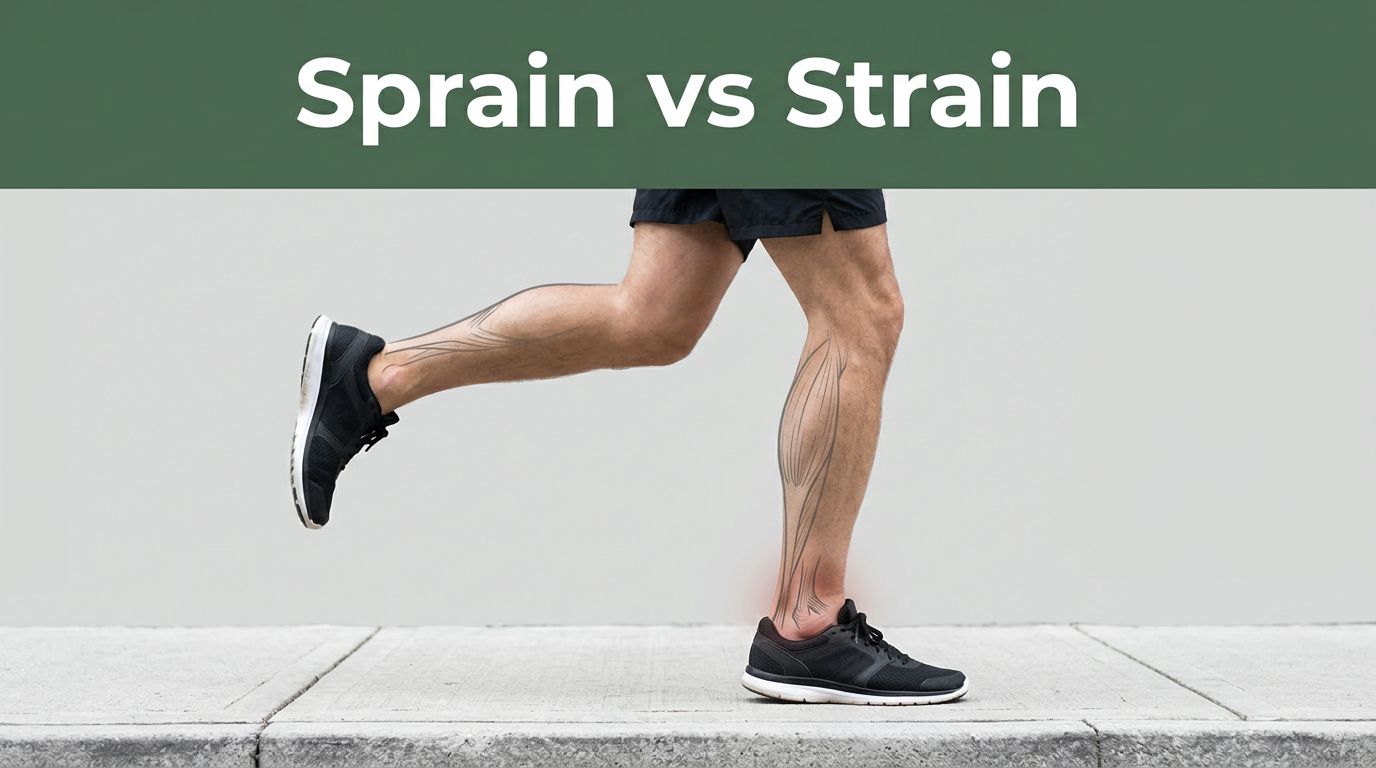
You twist your ankle on a sidewalk crack during a morning jog. Or you pull a hamstring mid-sprint in pickup basketball. Pain shoots through, swelling starts, and you wonder: sprain or strain? Both injuries stretch or tear soft tissues. A sprain hits ligaments around joints, like ankles or wrists. A strain affects muscles or tendons, such as in your back or calf.
These mishaps sideline millions yearly. They share symptoms like pain, swelling, and trouble moving the area. Quick action matters. It cuts swelling and speeds healing. Poor handling leads to longer downtime or repeat issues.
This guide covers spotting the difference, first aid with the updated POLICE method, doctor red flags, rehab steps, and prevention. You can handle most at home. Let’s get you moving again.
How to Tell If It’s a Sprain or a Strain
Sprains happen when you twist a joint suddenly. Ligaments stretch or tear. Think ankle roll during a hike. Strains come from overworking a muscle. You feel a sudden pull, like lifting heavy boxes wrong.
Both hurt right away. Swelling builds fast. Bruising may appear. You limit movement to avoid pain. However, clues help you guess the type.
Common spots differ too. Sprains strike ankles, knees, or thumbs often. Strains target hamstrings, calves, or lower back.
Self-diagnosis has limits. A pro confirms with exams or X-rays. For details on symptoms, check Mayo Clinic’s sprain overview or WebMD’s sprain and strain guide.
Here’s a quick comparison:
| Feature | Sprain (Ligaments) | Strain (Muscles/Tendons) |
|---|---|---|
| Main Cause | Twisting or impact on joint | Overstretch or overload |
| Key Symptoms | Joint instability, bruising | Muscle spasms, weakness |
| Common Areas | Ankle, knee, wrist | Hamstring, calf, groin |
| Pain Type | Sharp with movement, swelling quick | Sudden pull, soreness after |
In short, location and how it happened point the way. Still, treat both the same at first.
Follow the POLICE Protocol for Fast Relief
Old RICE worked okay. Now experts push POLICE for the first 24-72 hours. It adds protection and smart loading. Total rest stiffens tissues. Gentle moves heal better, per recent guidelines.
POLICE stands for Protect, Optimal Loading, Ice, Compression, Elevation. Start now. It reduces swelling and pain fast.
Protect the spot first. Use a brace or wrap. Skip full weight if it hurts. Crutches help for ankles.
Rest Without Going Crazy Still
Protect means limit use, not bed rest. Support the area. However, add optimal loading soon. Gentle moves, like flexing toes, prevent stiffness. Total immobility slows recovery.
After a day, try light weight if pain drops. This builds tissue strength early.
Ice It Right to Tame Swelling
Grab an ice pack. Wrap it in cloth. Apply 15-20 minutes every 2-3 hours. Never put ice straight on skin. It risks frostbite.
Ice numbs pain. It also shrinks blood vessels. Swelling drops as a result. Stop if skin turns white or numb.
Compress and Elevate Smartly
Wrap with an elastic bandage. Make it snug, not tight. Check toes or fingers stay warm and pink. Loosen if they tingle.
Elevate above heart level. Prop on pillows. Do this often, especially at night. Gravity drains fluid. Pain eases quicker.
For more on protocols, see Cleveland Clinic’s method details. Take ibuprofen too. Follow label doses.
Key Signs to See a Doctor Immediately
Most mild cases heal at home. But some need help fast. Delay risks chronic pain or instability.
Head to urgent care or ER if you hear a pop at injury. Can’t bear weight after tries. Numbness or tingling spreads. Severe swelling or bruising grows.
Pain worsens despite POLICE. Or symptoms linger over 3 days. Deformity or bone poke suggests fracture.
Doctors X-ray to rule out breaks. They brace or send to PT. Surgery stays rare. Early check prevents long-term woes.
Build Back Strong: Recovery and Rehab Tips
After 48 hours, shift to rehab if swelling fades. Pain guides pace. Full return takes days to months.
Start range-of-motion. Progress to strength and balance. PT customizes plans. It cuts re-injury risk.
Pain meds help short-term. Stay hydrated. Water eases stiffness.
Start with Easy Movements
Try ankle circles. Sit and trace alphabet with toes. Do 10 reps each way. Or point and flex foot.
These restore motion. They fight scar tissue. Add standing versions later.
Strengthen and Balance Step by Step
Build with calf raises. Rise on toes, 10-15 times. Use resistance bands next.
Balance on one leg. Hold 30 seconds. Advance to wobble board. For ankle plans, review this rehab exercise guide.
Progress slow. No pain means go ahead. Instability signals stop.
Prevent Sprains and Strains Before They Happen
Habits keep you safe. Warm up 5-10 minutes before activity. Dynamic stretches cut risk by 30%.
Wear supportive shoes. Replace worn ones. Build ankle and core strength weekly.
Train balance. Single-leg stands work. Avoid uneven paths if history exists. Listen to fatigue signals.
Braces help repeat offenders. Small changes add up. Stay active without fear.
You know the drill now. Hit POLICE fast for sprains or strains. Watch for doctor signs. Rehab smart, prevent next time.
Most heal fully at home. But see a pro for tailored advice. Share your recovery story below. What’s your go-to prevention trick? Bounce back stronger.
(Word count: 982)